What is Tai Chi — and why does it work?
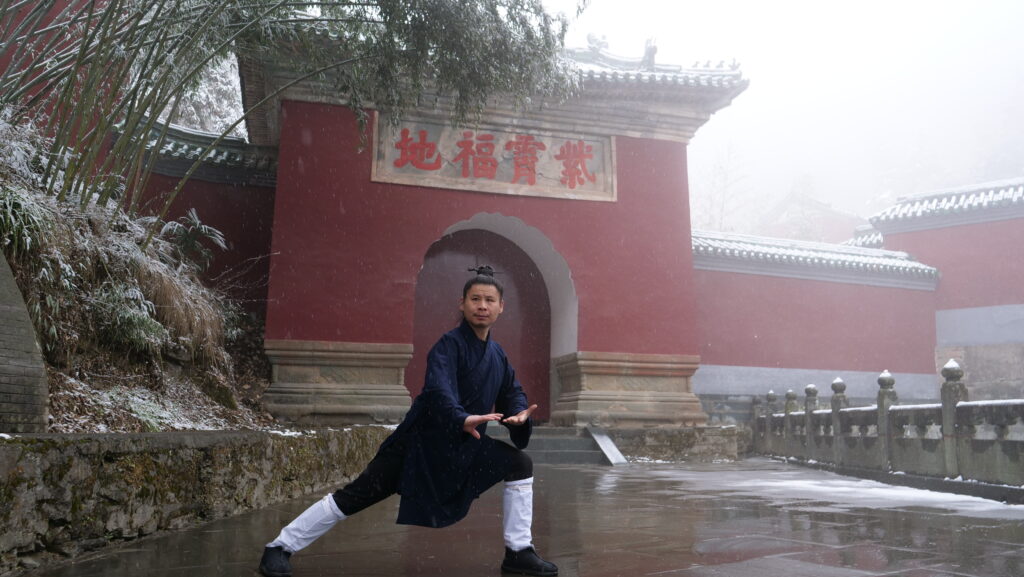
Most people have seen it — in a park, in a video, or in a film. A group of people moving slowly, almost in slow motion, arms tracing soft arcs through the air. It looks peaceful. It looks almost too gentle to do anything.
And that is exactly where most people’s understanding stops.
Because Tai Chi is not what it looks like from the outside. And the reason it works is not what most people expect.
Not a martial art. Not just exercise.
Tai Chi originated as a martial art — and a highly effective one. The slow, flowing movements that characterise modern practice are the same movements that, performed at full speed, were developed to defend, redirect force, and respond to an opponent. The slowness is not the point. The slowness is the training method.
But over centuries, something else became clear: the practice of moving this way — slowly, deliberately, with full attention on the body — had profound effects on health that had nothing to do with combat.
Practitioners who trained Tai Chi lived longer. They recovered from illness more quickly. They stayed balanced and mobile into old age. Their minds were calmer. Their sleep was better.
This was not mysticism. It was observation. And modern science has spent the last three decades trying to understand why.
What the research actually shows
The evidence on Tai Chi is more substantial than most people realise. This is not alternative medicine territory — it is peer-reviewed research published in mainstream medical journals.
Some of what the research has found:
Balance and fall prevention. Tai Chi is one of the most effective interventions known for reducing falls in older adults — more effective than many conventional exercise programmes. The practice trains proprioception, the body’s ability to sense its own position in space, in ways that ordinary exercise does not.
Stress and the nervous system. Regular Tai Chi practice has been shown to reduce cortisol levels, lower blood pressure, and shift the nervous system away from the chronic low-level activation that characterises modern stress. It activates what researchers call the parasympathetic nervous system — the body’s rest and recovery mode.
Chronic pain and inflammation. Studies have found significant benefits for people with fibromyalgia, arthritis, and chronic back pain. The mechanisms are not fully understood, but the results are consistent.
Cognitive function. Perhaps most surprisingly, Tai Chi practice has been associated with improvements in memory, attention, and executive function — even in older adults showing early signs of cognitive decline.
None of this is coincidental. It points to something the Daoist tradition understood long before modern medicine had the tools to measure it.
The Daoist principle behind the practice
In traditional Chinese medicine and Daoist philosophy, health is understood as the free and balanced flow of qi (气) — the vital energy that animates the body. Disease, pain, and mental disturbance arise when this flow is blocked, depleted, or out of balance.
Tai Chi was designed to cultivate and circulate qi through the body. The slow, continuous movements — performed with relaxed muscles, a calm mind, and coordinated breathing — create the conditions for the body to regulate itself.
You do not need to believe in qi to benefit from Tai Chi. But it helps to understand what the practice is actually asking of you.
It is asking you to slow down. To feel your body from the inside. To move without force. To pay full attention to this moment, this breath, this movement — not the next one, not the last one.
In other words: it is asking you to do the opposite of almost everything modern life demands.
Why slow is hard
One of the most common surprises for new Tai Chi students is discovering that moving slowly is genuinely difficult.
Not physically difficult — though it does challenge balance and body awareness in unexpected ways. But mentally difficult. The mind wants to rush ahead. It wants to think about the next movement, check whether it looks right, worry about doing it correctly.
Tai Chi requires you to stay in the movement you are in. To feel the weight shift from foot to foot. To sense the rotation in the waist. To notice the breath.
This is where the mental benefits come from. Every Tai Chi session is, in practice, also a meditation session — not a separate activity added on, but built directly into the movement itself.
Who it is for
One of Tai Chi’s most remarkable qualities is that it genuinely has no prerequisites.
You do not need to be fit. You do not need to be flexible. You do not need to be young. The practice was designed to be adaptable to any body, any age, any level of physical condition.
This is not marketing language — it is built into the philosophy. The Daoist principle of wu wei (无为), effortless action, means that the practice should never involve forcing the body beyond its natural range. You work with what you have. You meet yourself where you are.
This is also why Tai Chi is often recommended for recovery from illness or injury, for people with chronic conditions, and for older adults who want to maintain mobility and balance without the risk of high-impact exercise.
Where to begin
The most important thing about starting Tai Chi is simply to start.
You do not need to understand it fully before you try it. The understanding comes through the body, not through the mind — and no amount of reading will substitute for the experience of actually moving this way.
Our Wudang Nine Forms programme is designed specifically for beginners — people who have never practised Tai Chi, who may not be physically active, and who want a genuine introduction to the tradition rather than a watered-down fitness class.
Start with the free introductory session. Twenty minutes. One form. No equipment, no experience, no commitment required.
See what happens.
Ready to try? Start with our free Tai Chi intro class — no signup required. Or explore the full Nine Forms programme at Still Dao.